


Istanbul 2026: Four Years of Collaboration, Celebrated

Updated: Oct 12
Report from the closing Management Committee meeting of COST Action CA21168 (JIR-CliPS)

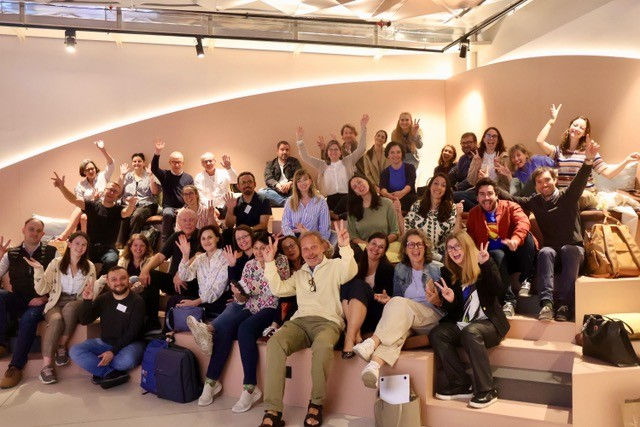
Our JIR-CLiPS Management Committee meeting in Istanbul marked the closing of four years of collaboration, innovation, and impact across the world, as part of COST Action CA21168*.
In Istanbul, our Management Committee meeting closed four years of work together within the COST Action CA21168 (JIR-CliPS)*. Each Working Group presented what it has achieved, and the meeting showed what this network is worth: people from many countries and specialties who share their practice, compare it openly and learn from each other.
We also looked beyond COST. The work will continue, and the network with it.
A big thank you to Prof. Michael for his outstanding leadership throughout this project, and to our wonderful team of Turkish colleagues for making this meeting possible in Istanbul.
To everyone who joined — thank you for the discussions, the collaboration, and the memories.
From recommendations to real practice
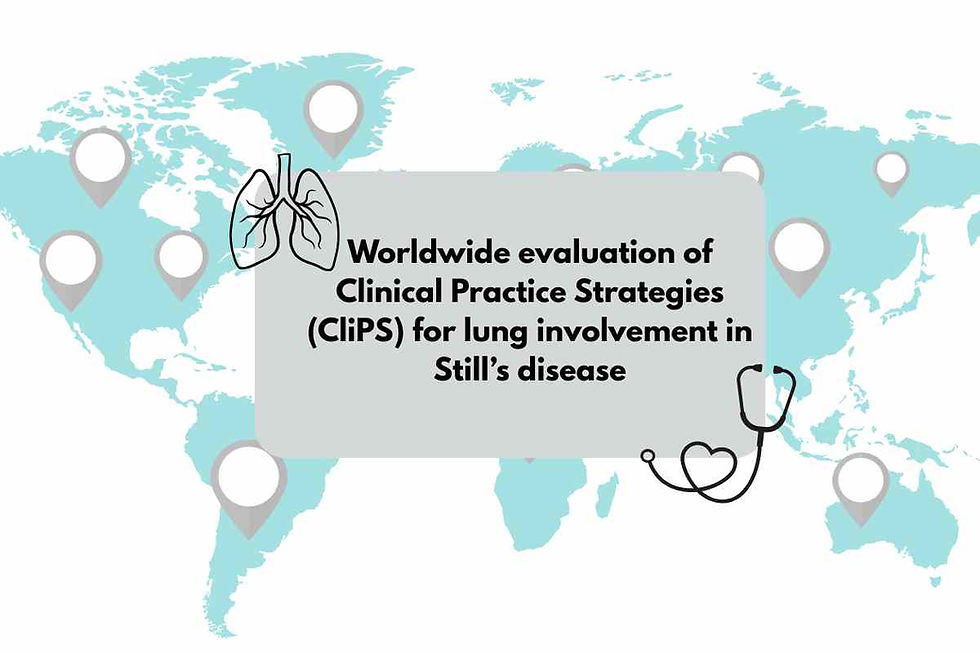
JIR-CliPS starts from a simple question: what do physicians really do when they see a patient, and why? We ask them through surveys built around real clinical situations (the CliPS, Clinical Practice Surveys), and then we look at where practice agrees and where it differs.
In Istanbul, Working Group 3 showed this for colchicine resistance in Familial Mediterranean Fever (FMF). The answers show that the definition of "colchicine resistance" varies with the physician's experience, the prevalence of the disease in the country, the socioeconomic context and the availability of biologics.
The other Working Groups found the same kind of picture. For PFAPA, physicians combine several arguments to make the diagnosis, and classification criteria are used as a help but almost never alone. Opinions on genetic testing also differ, for PFAPA as well as for SURF. And in the Kawasaki disease survey, physicians answered differently when asked about incomplete forms.
These differences are the starting point of our work. The goal is not to impose one rule, but to understand why practice differs and to offer physicians a library of options they can choose from for their own patient and setting.
Checking CliPS against registries
A survey tells us what physicians say they do. Registries tell us what happened to patients. Comparing the two is one of the most useful steps we took in this Action.
Working Group 3 carried out the first common project between leading European registries in the field of autoinflammatory diseases (AID): EuroFever, AIDA and the JIR cohort. It compared the CliPS answers with registry data. It was presented as an oral communication at a national congress, and the manuscript has been submitted.
The pilot was successful, so the approach was then deployed within Working Group 5, which is comparing one of its CliPS with the JIR cohort. The other Working Groups will follow soon.
This methodology is not limited to pediatric rheumatology. It can also be applied in other medical fields.
Beyond treatment
The CliPS first looked at diagnosis and treatment. The next step, called "CliPS 2026", is to include the patient perspective, costs and the environment, and to involve parents, teenagers and young adults in the questions we ask.
A network that reaches further
Our network includes members from many countries, and the figures presented in Istanbul show its reach:
42% of our members come from Inclusiveness Target Countries
35% are young researchers
71% are women
We also asked members what the network brings them. Of the 20 members who answered our feedback survey, 65% said they felt more included in the scientific community, and about half said they had gained confidence and could more easily ask for second opinions.
Working across specialties
Pediatric rheumatology cannot be done alone. The CliPS reached about 500 physicians from 10 specialties. In Istanbul, we discussed inviting more colleagues from different specialties, and we are building a new Working Group on nephrology. Advisory members from other specialties are welcome to join us.
Young researchers: the STSM programme
The Short-Term Scientific Missions (STSM) bring young physicians to Lausanne for a month to work together with experts on a research project. Dr Sofia Azevedo, who took part in 2023, told us what the experience gave her: a different way of thinking about research and a network she still relies on. Many STSM participants have stayed active in our Working Groups, which gives continuity from one cohort to the next.
Closing talk: how do we decide for one patient?
Prof. Michael Hofer closed the scientific programme with three everyday cases: a young child with recurrent fever, a boy with FMF who still has attacks under colchicine, and a toddler with possible incomplete Kawasaki disease. They look simple, but each raises questions on which experts do not agree.
Recommendations are essential, but a physician treats one patient, with one family, in one health system, and with the limits of what is available and reimbursed. Practice is therefore different from country to country, and sometimes from physician to physician. His message was that optimization of care should start from this diversity rather than from a single opinion, because care is not optimized the same way in Ghana, New Zealand, Brazil, Switzerland, Turkey or Portugal. The CliPS give a library of options to choose from and to discuss with the patient and the family.
The next steps he proposed are to continue our comparison of the CliPS with registries, to spread the results worldwide, and to go back to the literature and later check whether practice has changed for the better.
What comes next
COST funding ends this year, but the network continues. Our activities remain open to everyone:
the Winter School with topic JIA in 2027
the monthly clinical case discussions, where colleagues from around the world present patients
the work of the Working Groups, with several publications now in preparation or submitted
the STSM programme in Lausanne, which is funded in 2027 by the Fondation Hans Wilsdorf
Thank you to everyone in the network: the Core Group, the Working Group leaders and members, the STSM participants, our colleagues on six continents.
*(COST — European Cooperation in Science and Technology — is an EU-funded framework supporting research networks across Europe)
Comments